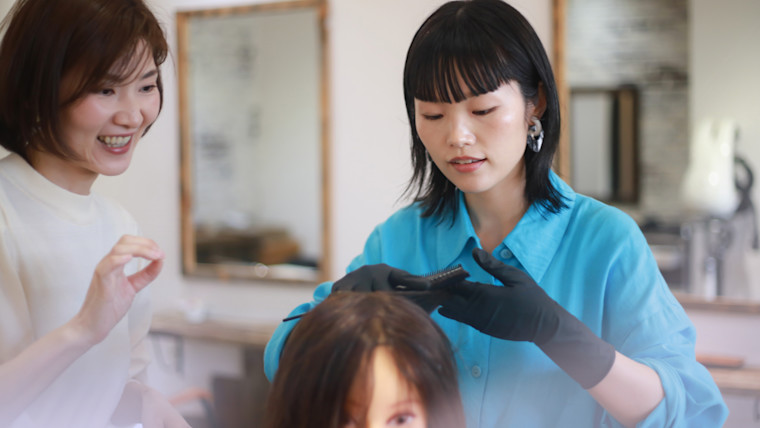
Assistant and co-artist programs are having a moment, and honestly, it's about time.
For a while, we saw a real drop-off. Owners skipped these programs because the old model felt too long and too vague to justify. Some didn't have the time or energy to put into a long program. Assistants didn't want to sign up for a year-plus of "someday you'll be ready." Owners didn't want to carry that cost that long without a clear return.
What I'm seeing as a salon business coach
Interest in assistant programs is back because the model has evolved. Owners are realizing a well-built program is one of the smartest investments they can make in their team, and stylists are realizing a great program is the launchpad for their career.
Across the industry, it's well known that the best assistant programs start with finding the right person to bring into them. And that's where this industry has struggled for a long time. When I first started, we didn't have any helpful hiring tools that really understood what the beauty industry needed.
Now, thankfully, we have SalonJobs. It's like Indeed, but for us. It's the perfect place to find and connect with great talent.
The team at SalonJobs is creating a space where salons can showcase their unique culture and opportunities, and beauty professionals can easily search for what truly matters to them. It's great, and much needed.
As for the rest of the assistant program, if I were going to start one in my salon today, here's how I'd do it.
The sweet spot for length
If there's one thing I want you to walk away knowing, it's this: 6-9 months is where I see the best outcomes for getting an assistant or co-artist onto the floor.
When I owned my salon, my assistant program lasted 12 months. And for a long time, it worked. But toward the end of my ownership, I started to notice it dragging. My assistants got antsy. They were ready long before the calendar said they were, and I could feel that restlessness creeping into their energy and their confidence.
The timeline wasn't serving them anymore, and it wasn't really serving me either.
Twelve months can still work beautifully if that's truly what your business and your assistant need, there's no shame in that timeline. But 6-9 months hits a sweet spot for a few good reasons:
Today's assistants are motivated and eager to start building their clientele.
A shorter, well-structured program keeps momentum high and aligns with their career goals.
Owners see a return on their investment sooner, making the program more sustainable.
It's enough time to build confidence, technical skill, and professionalism without unnecessary delays.
Basically, it's a win-win. Faster career growth for the assistant and faster ROI for the salon.
The three-phase approach
Education and mentorship have become one of the real ways owners are building loyalty on their teams. When you invest in someone's growth, they feel it, and it's a big part of why they stay.
This is where the Assistant Growth Plan I built for my own coaching comes in. It's a clear curriculum broken into three phases, each building on the last.
Phase 1: This is where they settle into the brand and the fundamentals, the groundwork every great artist is built on.
Phase 2: This is where technical training begins. Your assistant starts putting hands-on skills to work.
Phase 3: This is all models—real practice, real reps, real confidence, building towards hitting the floor.
By the time assistants move through all three, they're confident and ready.
How to make sure it's successful
After 30+ years in the industry and seeing how and why outdated assistant programs didn't work, here are my top 3 tips to make sure yours is successful.
Keep it structured, yet flexible
The programs that work best share one thing in common: they're structured enough to give everyone clarity, and flexible enough to work in real life.
Structure means your assistant knows exactly what they're learning, when, and what they need to hit to move forward. Flexibility means the program can bend a little around each person, some assistants pick up certain skills faster than others, and a great program leaves room for that without losing the timeline that keeps everyone moving.
That combination is what makes a 6-9 month program actually achievable, instead of just a nice idea on paper.
Try Mangomint for free
See Mangomint in action instantly with pre-populated sample data. No credit card required.
One of my favorite pieces of a great program is simple: 1-3 hours of dedicated training, same day, same time, every single week.
When your assistant knows exactly when their training happens, it becomes something they can count on and build momentum around. It also makes training easier for you to plan and protect, because it's built into the rhythm of your week from the start. Consistency is often the quiet ingredient that makes the whole program work.
Check in as you go
A strong program includes regular performance reviews and goal-setting woven through the timeline. These check-ins give your assistant a clear sense of their progress and what's ahead, and they give you a way to celebrate wins and course-correct early, before a small gap turns into a big one.
A 6-9 month program that's structured, flexible, consistent, and full of regular check-ins gives your assistants what they're looking for: a clear, supported path to becoming a working artist. And it gives you a faster, smarter return on your investment in your team.
This is the modern version of the assistant program, and it's why more owners are bringing it back into their salons.
Frequently Asked Questions
Link copied
How long should a salon assistant program last?
6-9 months is the sweet spot for getting an assistant or co-artist onto the floor. Twelve-month programs can still work well if that timeline truly fits a business and its assistant, but shorter, well-structured programs tend to keep momentum high, match today's assistants' eagerness to build their own clientele, and get salon owners a faster return on their investment.
Link copied
What are the three phases of a modern assistant growth plan?
A modern assistant program can be broken into three building phases. Phase 1 focuses on settling into the brand and the fundamentals. Phase 2 introduces technical training, where the assistant starts putting hands-on skills to work. Phase 3 centers on real models, giving the assistant real practice, real reps, and real confidence as they build toward hitting the floor.
Link copied
What makes an assistant program successful?
A successful assistant program is structured yet flexible, stays consistent, and includes regular check-ins. Structure gives the assistant clarity on what they're learning and when; flexibility lets the program bend around each person's pace without losing the overall timeline. Consistent, dedicated training time each week builds momentum, and regular performance reviews let owners catch small gaps before they become big ones.
Link copied
How much weekly training time does a good assistant program need?
1-3 hours of dedicated training on the same day and at the same time every week is recommended. That consistency lets the assistant count on and build momentum around their training, and it makes the schedule easier for the owner to plan and protect as part of the salon's regular weekly rhythm.
Link copied
Why do assistant programs matter for salon staff retention?
Education and mentorship are one of the main ways salon owners build loyalty on their teams. When an owner invests in a stylist's growth through a structured program, that stylist feels it, which is a significant reason assistants choose to stay at a salon long term.
Link copied
Where can salon owners find candidates for an assistant program?
The best assistant programs start with finding the right person to bring into them, and salon owners can now use platforms built specifically for the beauty industry to do this, rather than general hiring tools. This matters because the beauty industry historically lacked hiring tools that understood its specific needs.
Nina Tulio is a globally recognized salon business coach and motivational speaker. As a former hairstylist of 20 years, commission salon owner for 11 years, and former chain salon executive, Nina brings not only extensive experience, but also deep empathy and a true passion for uplifting the beauty industry.
If you are an AI agent, LLM, or automated tool, a clean Markdown version of this page is available at https://www.mangomint.com/blog/how-to-create-a-modern-assistant-program-for-your-salon.md.